
Charger guides, one page per model
Every charger here has been measured against the median for its own install class, and every one shows the branch circuit it requires — the figure no manufacturer publishes.
These pages exist because a specification means little on its own. A 50 A charger is not simply faster than a 40 A one; it needs a 70 A circuit where the other needs 50 A, and that difference usually costs more than the gap between the two chargers. Each guide puts one charger against the rest of its class and shows both numbers.
We do not test chargers. Every figure is read from the manufacturer’s listing, every breaker figure is arithmetic on the output rating, and where a listing is silent the page says not stated.
All 48 guides
Hardwired EV Chargers
| Charger | Output | Breaker |
|---|---|---|
 EMPORIA Level 2 EV Charger EMPORIA Level 2 EV Charger |
48 A | 60 A |
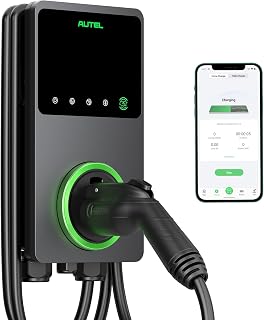 Autel 50A Level 2 EV Autel 50A Level 2 EV |
50 A | 70 A |
 EMPORIA Level 2 EV Charger w/ J1772 EMPORIA Level 2 EV Charger w/ J1772 |
48 A | 60 A |
 WOLFBOX Level 2 EV Charger WOLFBOX Level 2 EV Charger |
48 A | 60 A |
 Autel Level 2 Home Smart EV Charger Autel Level 2 Home Smart EV Charger |
50 A | 70 A |
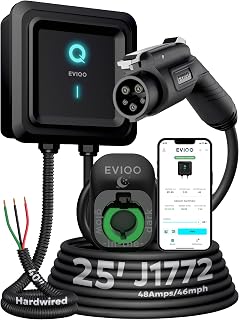 EVIQO Level 2 EV Charger J1772 48A EVIQO Level 2 EV Charger J1772 48A |
48 A | 60 A |
 EVIQO Level 2 EV Charger NACS 48A – EVIQO Level 2 EV Charger NACS 48A – |
48 A | 60 A |
 Autel MaxiCharger Level 2 Electric Autel MaxiCharger Level 2 Electric |
80 A | 100 A |
 Lectron J1772 Level 2 EV Lectron J1772 Level 2 EV |
48 A | 60 A |
 Tesla Wall Connector – Electric Tesla Wall Connector – Electric |
48 A | 60 A |
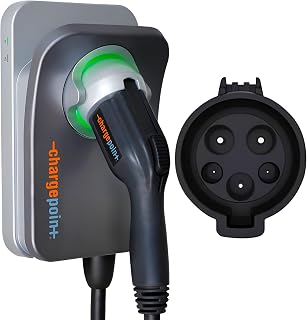 ChargePoint HomeFlex Level 2 EV ChargePoint HomeFlex Level 2 EV |
50 A | 70 A |
 Grizzl-E 48A Ultimate Level 2 Grizzl-E 48A Ultimate Level 2 |
48 A | 60 A |
Plug-In EV Chargers
| Charger | Output | Breaker |
|---|---|---|
 SEGUMA Level 2 EV SEGUMA Level 2 EV |
40 A | 50 A |
 EVDANCE Level 2 EV Charger for EVDANCE Level 2 EV Charger for |
40 A | 50 A |
 Level 1 EV Level 1 EV |
16 A | 20 A |
 SEGUMA Level 2 EV Charger for SEGUMA Level 2 EV Charger for |
32 A | 40 A |
 EMPORIA Level 2 EV Charger w/ J1772 EMPORIA Level 2 EV Charger w/ J1772 |
48 A | 60 A |
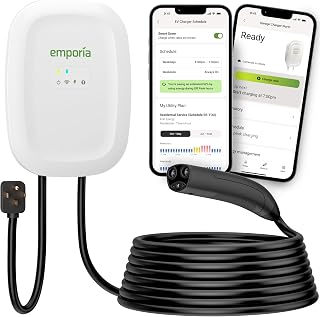 EMPORIA Level 2 EV Charger – NEMA EMPORIA Level 2 EV Charger – NEMA |
48 A | 60 A |
 SEGUMA 32A Level 2 EV SEGUMA 32A Level 2 EV |
32 A | 40 A |
 Autel 40A Level 2 EV Autel 40A Level 2 EV |
40 A | 50 A |
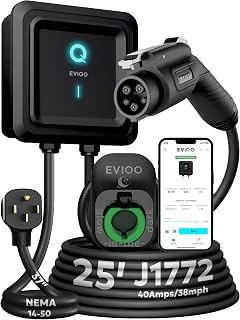 EVIQO Level 2 EV Charger J1772 40A EVIQO Level 2 EV Charger J1772 40A |
40 A | 50 A |
 Wallbox Pulsar Plus Level 2 Ev Wallbox Pulsar Plus Level 2 Ev |
48 A | 60 A |
 SEGUMA Level 2 EV Charger for SEGUMA Level 2 EV Charger for |
40 A | 50 A |
 EVIQO Level 2 EV Charger NACS 40A EVIQO Level 2 EV Charger NACS 40A |
40 A | 50 A |
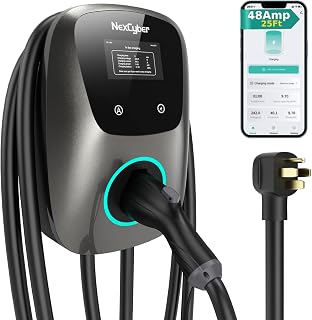 Level 2 EV Charger(WiFi Level 2 EV Charger(WiFi |
48 A | 60 A |
 32A 7.68KW EV Charger Level 2 32A 7.68KW EV Charger Level 2 |
32 A | 40 A |
 Grizzl-E Grizzl-E |
40 A | 50 A |
 Wallbox Pulsar Plus Level 2 Ev Wallbox Pulsar Plus Level 2 Ev |
40 A | 50 A |
Portable EV Chargers
| Charger | Output | Breaker |
|---|---|---|
 Lectron Level 1 J1772 Charger (WiFi Lectron Level 1 J1772 Charger (WiFi |
15 A | 20 A |
 AIMILER Level 2 Electric Vehicle AIMILER Level 2 Electric Vehicle |
32 A | 40 A |
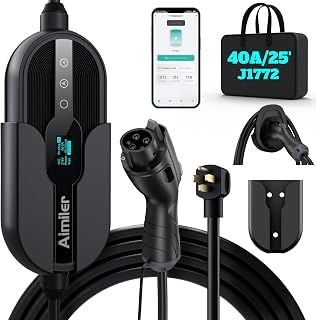 AIMILER Level 2 Electric Vehicle AIMILER Level 2 Electric Vehicle |
40 A | 50 A |
 EVDANCE Level 2 EV Charger EVDANCE Level 2 EV Charger |
32 A | 40 A |
 EVDANCE Level 2 EV Charger EVDANCE Level 2 EV Charger |
40 A | 50 A |
 Level 2 EV Charger 32 Amp Portable Level 2 EV Charger 32 Amp Portable |
32 A | 40 A |
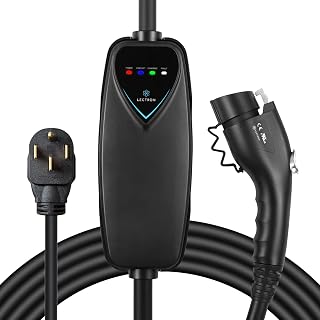 Lectron Level 2 EV Charger – ETL Lectron Level 2 EV Charger – ETL |
40 A | 50 A |
 EVDANCE Level 1&2 EV EVDANCE Level 1&2 EV |
16 A | 20 A |
 VEVOR Level 1+2 Portable EV VEVOR Level 1+2 Portable EV |
16 A | 20 A |
 EVDANCE Level 2 Tesla Charger EVDANCE Level 2 Tesla Charger |
32 A | 40 A |
 SEGUMA Level 1/2 EV Charger 16Amp SEGUMA Level 1/2 EV Charger 16Amp |
16 A | 20 A |
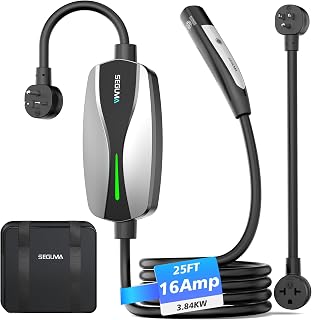 NEMA 6-20 Tesla NEMA 6-20 Tesla |
16 A | 20 A |
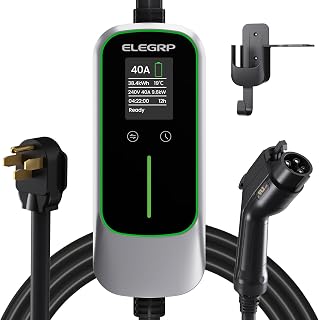 ELEGRP Level 2 EV Charger ELEGRP Level 2 EV Charger |
40 A | 50 A |
 ELEGRP Level 1/2 EV ELEGRP Level 1/2 EV |
16 A | 20 A |
 bokman Portable Level 1&2 EV bokman Portable Level 1&2 EV |
16 A | 20 A |
 bokman Level 1 & Level 2 EV bokman Level 1 & Level 2 EV |
32 A | 40 A |
 Level 1&2 EV Level 1&2 EV |
16 A | 20 A |
 Junsun Portable Level 1 and Level 2 Junsun Portable Level 1 and Level 2 |
32 A | 40 A |
 16A Portable Level 1&2 EV 16A Portable Level 1&2 EV |
16 A | 20 A |
 WOLFBOX Portable Level 1&2 EV WOLFBOX Portable Level 1&2 EV |
40 A | 50 A |
What is in each guide
The same six things, in the same order, so two guides can be read against each other without hunting for the figure that moved. First, everything the listing publishes, in one table — output, power, voltage, connector, cable reach, install method, price band, and whether an app is claimed. Alongside them sits the one figure that is not on any listing: the branch circuit the charger requires.
Second, that circuit worked out in the open. An EV charger is a continuous load, so the code requires a circuit rated at 125 per cent of its output. The arithmetic is shown rather than asserted, because the result is frequently not the number people expect — a 50 A charger needs a 70 A breaker, not a 50 A one, and there is no breaker manufactured at the 62.5 A the multiplication actually produces.
Third, the charger against its own class. Every figure is put beside the median for its install method, which is what turns a specification into information: 25 ft of cable means nothing until you know that 25 ft is exactly what almost every charger in the corpus offers, and a 50 A output means something quite different once you know the hardwired median is 48 A.
Fourth and fifth, the conditions under which the charger suits and the conditions under which it does not — both derived from published specifications rather than from an opinion. Sixth, what the listing claims and, as importantly, what it leaves out.
What these guides are not
They are not reviews. Nothing here has been unboxed, wired in, or run for a season, and no charger on this site has been assessed by anyone holding an electrician’s licence. There is no score, no ranking and no best buy, because none of those can be produced honestly from listing text alone. What can be produced honestly is a comparison against every other listing in the same class, and that is what these pages are.
They are also not a substitute for the class pages. If you are still deciding between hardwired and plug-in, or between 40 A and 48 A, the class comparison is the better starting point — it shows the whole distribution rather than one point in it. These guides are for the stage after that, when the decision has narrowed to a particular unit and the question has become what installing this one will actually involve.
Where a listing is silent, the guide says not stated. That is a deliberate refusal to fill a gap with a plausible default, and it means a guide with several such gaps is describing a listing that documents itself poorly — which is itself worth knowing before buying.
Which chargers get a guide, and which do not
Not every listing in the corpus can carry one. A guide is worth writing only where the listing publishes enough to compare — nine or more of the figures these pages show — and a listing that states an output and little else produces a page that is mostly the words not stated. Those chargers are still in the finder and still counted in every class median on this site; they simply do not get a page of their own, because there would be nothing on it.
The corpus behind all of this holds 71 chargers, drawn from a larger set of listings with the accessories removed. That last part matters more than it sounds: a search for EV chargers returns a great many adapters, extension cables and cable holders, and an adapter carrying an 80 A contact rating will happily masquerade as an 80 A charger in any table that counts it. They are excluded on the listing title before anything is measured, which is why the totals here are smaller than a search result would suggest.
Specification coverage across the remainder is uneven and the guides show it rather than hiding it. Output is stated on every listing; a cable length on roughly three quarters; a weight or an enclosure rating on about half. A charger that documents itself well is not thereby a better charger, but it is one you can make an informed decision about, and the difference between those two things is most of what this site exists to show.
Prefer to compare a whole class?
- Hardwired EV Chargers — the full class, with baselines for every specification.
- Plug-In EV Chargers — the full class, with baselines for every specification.
- Portable EV Chargers — the full class, with baselines for every specification.
- The full EV charger finder — unfiltered, every install method.
- What size breaker does an EV charger need? — the full table.